Baseball Sporting Embroidery Design Review for Small Business Merch
First Impressions: A Bold and Playful Foundation for Branding
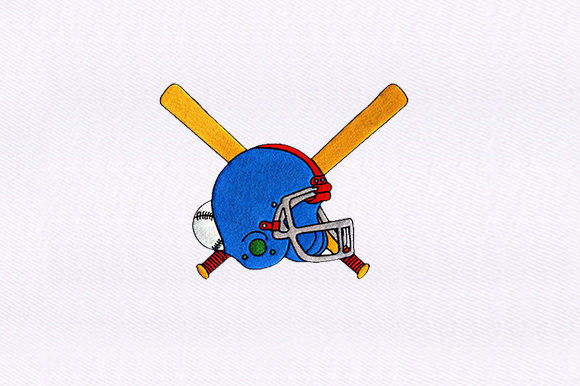
As an experienced embroidery designer, the first thing that caught my attention with the Baseball Sporting machine embroidery design is its visual personality. The name suggests a sports-inspired motif, but when paired with the product category of Food, it hints at something more—perhaps a baseball-themed café, a food truck with a retro vibe, or a boutique offering playful, sporty-style branded merchandise.Real-World Application in Small Business Projects
Baseball Sporting has potential as a strong design element for various small business applications. For example:
- Embroidered patches: It works well as a patch design, especially for back pockets on aprons or staff uniforms. The clean lines and recognizable theme make it suitable for both sew-in and iron-on versions.
- Chest logo accents: As a chest logo on work shirts or custom apparel, it adds a fun and professional touch without overwhelming the garment.
- Sleeve details: When scaled down, it can serve as a subtle sleeve detail for tote bags or hoodies, enhancing the brand's presence without being too loud.
- Cap embroidery: On caps, this design could act as a front-facing emblem or a side accent. However, due to cap curvature, careful testing is needed to ensure the design lays flat and doesn’t distort.
- Tote bag marks: For tote bags used as customer gifts or event merch, Baseball Sporting brings a cohesive look that aligns with a casual, approachable brand identity.
- Apron designs: In cafés or bakeries, using this design on aprons can add character and reinforce the theme of your establishment—especially if you're going for a nostalgic or local feel.
- Product packaging accents: If your business uses printed or embroidered packaging, this design could subtly appear on corners or seams to build visual consistency.
- Boutique merchandise: Handmade brands and Etsy sellers may appreciate how this design can elevate simple items like aprons, canvas bags, or even reusable straws with a themed twist.
Overall, the design feels like a great fit for businesses in the food industry or those who want to infuse some handmade product charm into their offerings. It conveys a sense of playfulness and community, which are essential traits for attracting customers in today’s market.
Where to Use with Caution
While Baseball Sporting is adaptable, there are several considerations to keep in mind before placing it on every surface:- Small patch sizes: If you’re planning to use this design as a tiny patch (say, under 2 inches), test it first. Smaller dimensions might lose clarity in detailed areas.
- Cap fronts: Due to the curved nature of caps, this design could require manual adjustments to maintain symmetry and prevent puckering.
- Curved surfaces: Designs with angular elements can struggle on curved or irregular shapes. Consider simplifying the layout or adjusting the placement accordingly.
- Tiny lettering: If the design includes text, confirm whether it’s legible at smaller scales. Tiny fonts may become blurry or hard to read after embroidery.
- High stitch density: Depending on the complexity, certain sections may have high stitch density, which can lead to fabric distortion if not properly stabilized.
- Detailed outlines: Any intricate borders or fine lines should be reviewed for stitch continuity and alignment, particularly when scaling up or down.
- Textured fabric: This design may not show up as clearly on textured materials such as denim or felt. Smooth cotton blends tend to yield the best results.
- Dark uniforms: Thread color contrast becomes crucial here. Light-colored threads on dark backgrounds will enhance visibility and brand recognition.
- Items needing frequent washing: High-density stitching and poor stabilizer choices can lead to fraying or warping over time. Make sure to test durability on frequently washed items like aprons or uniforms.
Building Brand Identity Through Embroidery
One of the most important aspects of using any machine embroidery design in a business context is how it contributes to brand identity. Baseball Sporting offers a friendly, bold aesthetic that can help position your brand as approachable yet professional. Whether you’re creating small business merch for a local bakery or designing custom apparel for a pet grooming studio, this design can serve as a consistent visual anchor.
Its use across multiple items—like apron embroidery or cap embroidery—can create a unified look that strengthens customer trust and recognition. When people see the same design on different products, they begin to associate it with your business, improving brand identity and recall. The right thread colors and fabric choices can also elevate the perceived value of your finished product.
Designer Tips for Implementing Baseball Sporting Effectively
Here are some practical notes to help you integrate Baseball Sporting into your next project:- Test in black and white first: Before finalizing thread colors, preview the design in grayscale to evaluate its structure and balance.
- Check small patch size viability: Scale the design to the intended patch size and inspect for clarity and stitch integrity.
- Review thread color contrast: Choose thread colors that stand out against your fabric. Darker fabrics benefit from light-colored threads and vice versa.
- Inspect spacing: Ensure the design doesn't overlap with other design assets or get cut off at the edges when placed on garments or accessories.
- Confirm hoop size: Although specific hoop requirements aren't listed, always verify that your machine’s hoop accommodates the full design without cutting stitches.
- Test on real fabric: Always run a sample stitch on actual material to check how it performs in terms of tension and lay-flat quality.
- Use proper stabilizer: Especially for stretchy or thin fabrics, using the correct stabilizer is key to avoiding puckering or distortion.
- Create a mockup for client approval: Use a printable mockup to show how the design looks on the final item before moving to production.
- Compare it beside other design assets: Make sure the design complements your existing logos or motifs to maintain visual consistency.
- Confirm commercial licensing: Since this is a digital embroidery file, double-check the license agreement to ensure it allows for commercial embroidery projects.