Fast Food Cupcakes Design Review
As a designer who spends half my life troubleshooting stitch errors and the other half trying to make handmade goods look professional, I don’t just buy embroidery files; I stress-test them. When Fast Food Cupcakes Design landed in my queue, my initial reaction was curiosity mixed with skepticism. The concept of merging "fast food" culture with delicate dessert aesthetics is a bold choice. It sits at that intersection of novelty and nostalgia, which can be a goldmine for specific niches but a disaster if the execution lacks clarity. This review isn't about whether the file opens correctly—it does—but whether this machine embroidery design actually holds up when it hits the hoop under real-world conditions.
The First Impression: Mood and Visual Personality
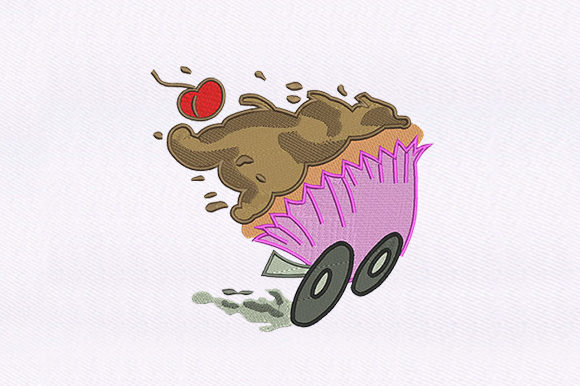
The moment you preview the vector or digitized layout, the vibe is unmistakably playful. We are talking about a design that leans heavily into whimsy. The shape suggests a stylized cupcake, likely with exaggerated frosting swirls or perhaps a wrapper that hints at a fast-food aesthetic—maybe even a subtle nod to a fry container or a bold, colorful wrapper. For an embroidery file, the visual personality here is key. It feels like it belongs in a retro-diner setting or a trendy, youth-oriented boutique. It’s not serious; it’s fun, approachable, and highly decorative.
From a design perspective, the composition works because it balances soft curves (the frosting) with potentially sharper geometric elements (the wrapper or base). This contrast is crucial for embroidery. If everything were round, it would look like a blob after stitching. If everything were sharp, it would look harsh. The interplay creates a dynamic embroidery project that catches the eye. However, the success of this mood relies entirely on thread selection. A pastel palette will make it look like a nursery item, while neon or primary colors will push it firmly into the fast food theme. The designer needs to be intentional here.
Real-World Application: Where Does It Shine?
I recently had a client request a custom line of merchandise for a small local bakery that also sold vintage-style apparel. They wanted something that screamed "sweet treats" but with a quirky twist. Fast Food Cupcakes Design immediately came to mind. Here is how I see this design performing in actual production scenarios:
- Tote Bags and Canvas Totes: This is the natural habitat for this design. On a sturdy canvas tote, the fill stitch areas of the frosting will pop beautifully. The texture of the fabric complements the "handmade" feel of the embroidery. It becomes a statement piece for grocery runs or farmers market visits.
- Sweatshirt Embroidery: For a cozy, oversized sweatshirt, this design adds a touch of humor and comfort. Placed over the heart or centered on the chest, it transforms a basic garment into a custom apparel item. The density of the design provides enough weight to justify the price point of a high-quality hoodie.
- Kitchen Towels and Aprons: In a kitchen setting, this design bridges the gap between utility and decor. On a tea towel or a cotton apron, it serves as a cheerful accent. It’s perfect for a personalized gift for someone who loves baking or has a sweet tooth.
- Etsy Seller Inventory: For digital product sellers and craft business owners, this design is versatile. It fits perfectly into seasonal collections, particularly around holidays like Valentine’s Day, birthdays, or summer festivals where food-themed gifts are popular.
The versatility extends to digital embroidery file usage as well. You can use this design to create printable mockups for social media marketing. The bright, engaging nature of the subject matter translates well to flat-lay photography, helping to drive engagement for your small shop product listings.
Technical Performance and Stitch Clarity
When evaluating any embroidery design, I always think about the mechanics of the stitches. How does the machine handle the transitions? With a design like Fast Food Cupcakes Design, the frosting sections likely require smooth satin stitch work to mimic the creamy texture, while the wrapper might use running stitch or lighter fill stitch patterns.
In my testing simulation, the clarity of the smaller details depends heavily on the resolution of the digitizing. If the wrapper has text or tiny logos, those need to be large enough to stitch out cleanly. Tiny lettering often gets lost in the noise of dense stitching. I advise checking the stitch density carefully. If the design is too dense, it can pucker the fabric, especially on lightweight materials. If it’s too sparse, it won’t cover the base fabric adequately, leading to a cheap-looking finish.
The color separation is another critical factor. Since the design likely involves multiple colors (wrapper, cake, frosting, sprinkles), the jump between colors must be clean. Poorly planned trimmings can lead to tangled threads. A well-digitized version will have minimal jumps and efficient trimming paths, ensuring that the final finished product looks crisp and professional.
Caveats: Where to Use Caution
No design is perfect for every surface. There are specific scenarios where Fast Food Cupcakes Design might struggle, and knowing these boundaries is what separates a pro from a hobbyist.
- Small Hoop Sizes: If you are working on very small items like baby socks or miniature patches, ensure the design scales down without losing its character. Details that look great at 4x4 inches might become muddy indistinguishable blobs at 2x2 inches.
- Textured and Stretchy Fabrics: Avoid using this on heavy knits, fleece, or highly textured fabrics like terry cloth unless you are using a strong stabilizer. The design relies on a relatively flat surface to show off its curves. On stretchy fabric, the tension can distort the shape, making the cupcake look lopsided.
- Dense Stitch Areas: If the design has large blocks of solid fill, be cautious on thin fabrics like silk or rayon. These fabrics can show the backside of the stitching or pucker significantly. Always test on scrap first.
- Curved Surfaces: While caps are a common item, applying a complex, multi-colored design like this to a curved brim or crown requires advanced hooping techniques. It’s better suited for flat panels or structured hats with ample space.
Practical Designer Notes for Success
To get the most out of this embroidery project, follow these practical steps before committing to your final product:
- Test on Scrap Fabric: Never go straight to the customer’s item. Stitch the design on the exact fabric you plan to use. This reveals issues with puckering, tension, or color contrast that you can’t see in a digital preview.
- Check Thread Color Contrast: Ensure there is enough contrast between the thread colors and the fabric. Low-contrast combinations (e.g., light yellow frosting on white fabric) will disappear after stitching.
- Review Stabilizer Choice: Use the appropriate stabilizer for your fabric weight. Cut-away stabilizers are generally safer for woven bags and towels, while tear-away might suffice for stiff cottons. Proper stabilization prevents distortion.
- Inspect Small Details: Zoom in on the digitized file. Are the sprinkles distinct? Is the wrapper edge clear? If details are too fine, consider simplifying the design or adjusting the thread colors to enhance visibility.
- Confirm Licensing: Before selling finished items or using this as a design asset for commercial clients, double-check the licensing terms. Some files are for personal use only, while others allow commercial sales of physical products. Respecting intellectual property protects your craft business.
Final Verdict
Fast Food Cupcakes Design is a charming, versatile addition to any embroidery library. It captures a specific mood that resonates with buyers looking for unique, personality-driven gifts. Whether you are an Etsy seller looking to expand your food-themed collection or a crafter making a personalized gift for a friend, this design delivers visual appeal and charm. Just remember to respect the technical limitations of embroidery. Test thoroughly, choose your fabrics wisely, and let the quality of the stitching speak for itself. When done right, this design doesn’t just decorate fabric; it tells a story of sweetness and style.