Home Sewing Machine Design Review
If you are an Etsy seller, a boutique maker, or someone who spends their weekends setting up a booth at local craft fairs, you know that the difference between a sale and a browse often comes down to visual impact. As an experienced embroidery designer, I spend my days evaluating digital files not just for their artistic merit, but for their commercial viability. Today, I am reviewing the Home Sewing Machine Design. This piece promises to be a beautiful and intricate addition to any crafter’s library, specifically targeting those who love sewing. But does it hold up under the scrutiny of production? Can it stand out in a sea of handmade goods?
The description highlights that this machine embroidery design is "beautiful and intricate," suggesting it will look stunning on a variety of fabrics. It also mentions that the design comes with multiple options, which is a crucial detail for versatility. In this review, we will break down how this embroidery file performs across different product types, what practical considerations you need to keep in mind during production, and whether it is worth adding to your inventory for the upcoming market season.
First Impressions: Intricacy Meets Theme
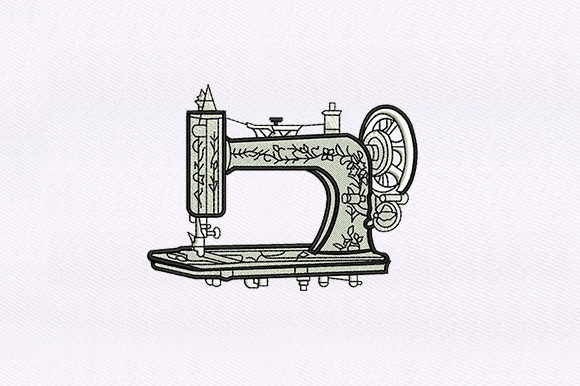
When you first load a new digital embroidery file into your software, you are looking for clarity and balance. The Home Sewing Machine Design immediately signals its niche. It is not a generic floral or a simple quote; it is a thematic centerpiece. For the target audience—people who sew, quilt, or appreciate textile arts—this design speaks directly to their passion. The "intricate" nature mentioned in the description suggests a higher stitch count and more detailed elements than a basic outline design. This complexity can work for you in two ways: it increases the perceived value of the finished product, and it creates a focal point that draws the eye from across a crowded table.
However, intricacy requires precision. A design that looks delicate on a screen can become muddy if the thread colors clash or if the fabric texture interferes with the stitches. Because this design features a sewing machine, likely with details like thread spools, needles, or dials, it demands a high level of contrast. If the design relies on fine lines to convey the shape of the machine, you must ensure your thread colors provide enough separation. A monochromatic scheme might look elegant in a printable mockup, but in person, it could lose definition. I recommend using a contrasting bobbin thread or selecting a background fabric that makes the primary design pop.
Product Applications: Where Does It Sell Best?
One of the biggest questions for any small shop product creator is where to place the design. The Home Sewing Machine Design is versatile, but some applications will yield better results than others. Here is a breakdown of how this design fits into common craft fair categories.
- Tote Bags and Market Bags: A classic choice for crafter fair products. Placing this design centrally on a canvas tote bag offers a large, flat surface area that allows the intricate details to shine. It appeals to other sewists who carry their fabric scraps or patterns. Ensure the bag fabric is sturdy enough to handle the weight of the embroidery without puckering.
- Aprons and Kitchen Towels: These are high-volume sellers. An apron embroidery featuring a sewing machine design is perfect for the home cook or the DIY enthusiast. On tea towels, the design should be scaled appropriately so it doesn’t overwhelm the fabric. This is an excellent entry-level price point for customers browsing your booth.
- Embroidered Patches: If the design includes a clean border or can be easily bordered, turning it into an embroidered patch is a smart move. Patches can be ironed or sewn onto hats, jackets, or backpacks. They are portable, inexpensive to produce in bulk, and highly giftable.
- Caps and Beanies: Curved surfaces present a challenge. If you are using a cap frame, ensure the design is optimized for curvature. Small details might get lost or distorted on the curve of a baseball cap. Test this thoroughly before committing to a large batch.
- Pillow Covers and Home Decor: For a more premium feel, consider placing the design on a linen pillow cover. This elevates the item from a utility product to a decorative one, allowing you to charge a higher price point. The intricate nature of the design adds a touch of sophistication that fits well in farmhouse or modern decor styles.
Production Practicalities and Quality Control
As a designer, I always tell my clients: trust, but verify. Before you rush into mass production for a weekend market, you must address several technical aspects of the Home Sewing Machine Design.
First, check the stitch density. Intricate designs often pack stitches closely together. If the density is too high, the fabric may pucker, especially on lightweight materials like cotton tea towels. You need to use the right stabilizer to support the fabric during stitching. For woven cottons, a cut-away stabilizer is often best for durability, while tear-away might suffice for lighter items if the hoop tension is correct.
Second, inspect the spacing. Look at the negative space within the design. Are there areas where the stitches are too close, risking thread breaks? Are there gaps that are too wide, making the design look sparse? Run a test sample on scrap fabric that matches the color and texture of your final product. Fabric texture plays a huge role; a ribbed knit might hide small details, while a smooth sateen will reveal every stitch.
Third, confirm the hoop size. Make sure the design dimensions fit comfortably within your machine’s maximum hoop size. If you plan to digitize variations or scale the design, remember that scaling up too much can make the design look blocky, while scaling down too much can cause tiny details to disappear entirely. Always create at least one real mockup before listing the item online.
Photography and Online Presentation
In the world of Etsy sellers and online shops, photography is your salesperson. The Home Sewing Machine Design has strong visual appeal, but it needs to be captured correctly. Use natural light to show the true color of the threads. Take close-up shots that highlight the texture and quality of the stitches. Show the product in use—a tote bag filled with fabric rolls, or an apron worn by a model holding scissors. This helps potential buyers visualize the item in their own lives. Your printable mockups should accurately represent the scale of the design relative to the product. Do not exaggerate the size, as this leads to returns and bad reviews.
Commercial Licensing and Final Thoughts
Before you start selling these items, you must address the legal side of things. The product description mentions that the design comes with "multiple" options, but it does not explicitly state the licensing terms. It is critical to read the end-user license agreement (EULA) included with your download. Does it allow for commercial use? Is there a limit on the number of finished products you can sell? Many commercial embroidery licenses require you to purchase a separate commercial license if you intend to sell physical items made from the design. Failing to do so can result in legal issues. If the license is unclear, contact the designer or retailer directly to confirm.
Ultimately, the Home Sewing Machine Design appears to be a strong contender for any crafter looking to expand their offerings. Its theme resonates deeply with a specific, passionate demographic. By paying attention to fabric selection, stabilizer choice, and photographic presentation, you can turn this digital file into a tangible success. Whether you are creating a single custom order or producing a batch of tea towel embroidery for a busy Saturday market, this design offers the intrigue and quality needed to attract customers. Just remember to test, test, and test again. Good luck with your next collection!